The United States is engaging in a dangerous exercise in bean-counting. The media hullabaloo over missile magazines and lengthy ship deployments is in fact a distraction from the real issue. American options to fight China, the premier power it faces, have narrowed so thoroughly as to make discussions of stockpiles grossly secondary to strategy. The U.S. must adopt a radically different posture to defeat China if war comes, one with the explicit expectation it will attack targets on the Chinese mainland. An offensive strategy, such as this, may secure deterrence, while fixating on the defensive approach of maximizing interceptor numbers, will raise the odds of war.
In the aggregate, the U.S. has expended a great deal of ordnance fighting Iran. According to open-source estimates, the U.S. has used roughly a quarter of long-range, air-launched cruise missiles (JASSMs) and anti-air and anti-ship Standard Missile 6s, a third of its Tomahawk cruise missiles, half of its Standard Missile 3 interceptors, and half or more of its remaining THAAD and Patriot interceptors. Concurrently, the U.S. has expended most of its short-range surface-to-surface missiles (ATACMS) and short-to-medium ground-launched missiles (PrSMs). The result, the commentariat tells us, is a catastrophe for Indo-Pacific deterrence.
Taking each system in turn, however, tells a different story when set against American military needs in Asia. The ATACMS and PrSM ground-launched missiles, for instance, have a limited role in an Asian conflict where U.S. strategy must aim to deprive China of its maritime capabilities. ATACMS is a ground-attack weapon, not an anti-ship ballistic missile. It lacks the range to hit Chinese targets unless deployed on Taiwan itself. Significant demand for ATACMS still exists – in Europe, where Ukraine and other European partners see it as a proven, reasonable-cost weapon for interdiction. PrSM has longer range. But it entered production only in 2023. Its use against Iran likely generated enormous quantities of mission data that enable modifications for a conflict in Asia.
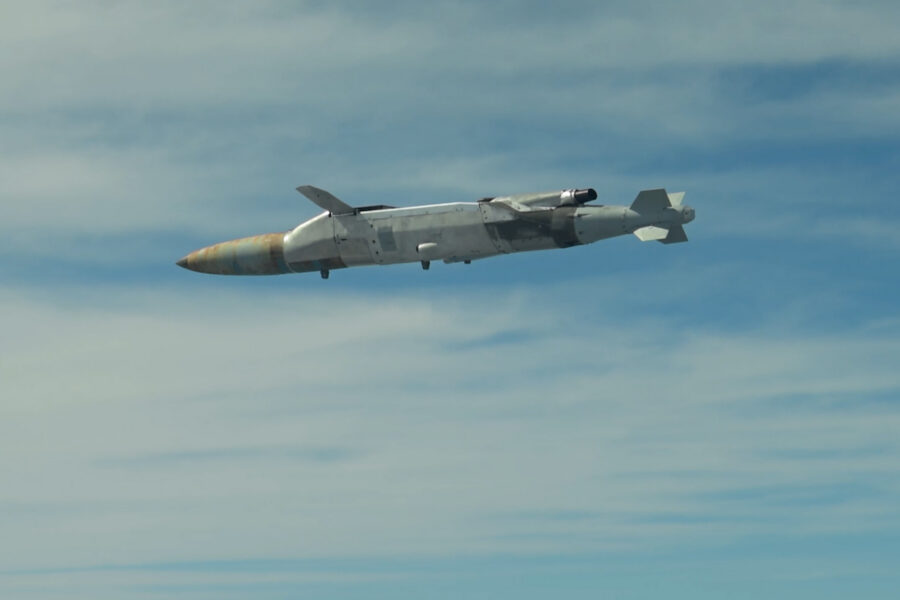
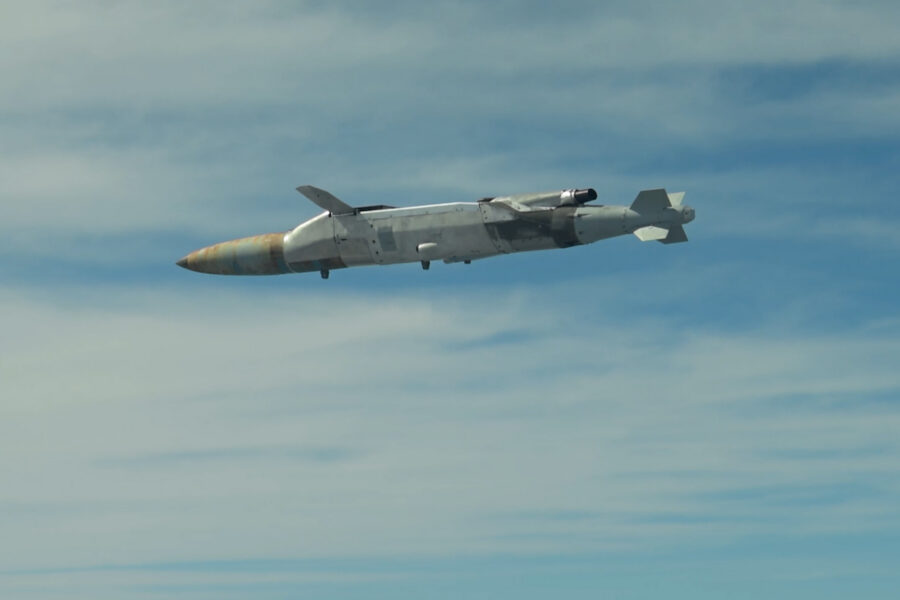
More relevant are the Tomahawks, SM-6s, and JASSMs. These weapons are essential for degrading China’s surveillance and strike fortress, generated by its massive short-range missile arsenal. The former weapon is either ship or submarine launched. It moves relatively slowly and requires sequencing with other weapons. The SM-6, which can be used to intercept missiles and as an anti-ship missile alongside the more limited long-range anti-ship missile (LRASM), will degrade Chinese naval assets as would American submarines.
These weapons matter. But as relevant as “magazine depth,” the military term for how many remaining weapons are available, is the reality that these weapons are all designed to hit targets on or near the mainland. Just sinking the Chinese fleet is not enough. China’s fleet is already larger than the U.S. Navy. It operates near its bases and alongside ground-based missiles and land-based aviation. Indeed, the Chinese Navy is not simply its ships – it is this entire complex of weapons on the mainland that must be degraded.
Read the rest at RealClear Defense.
Seth Cropsey is the founder and president of Yorktown Institute.