
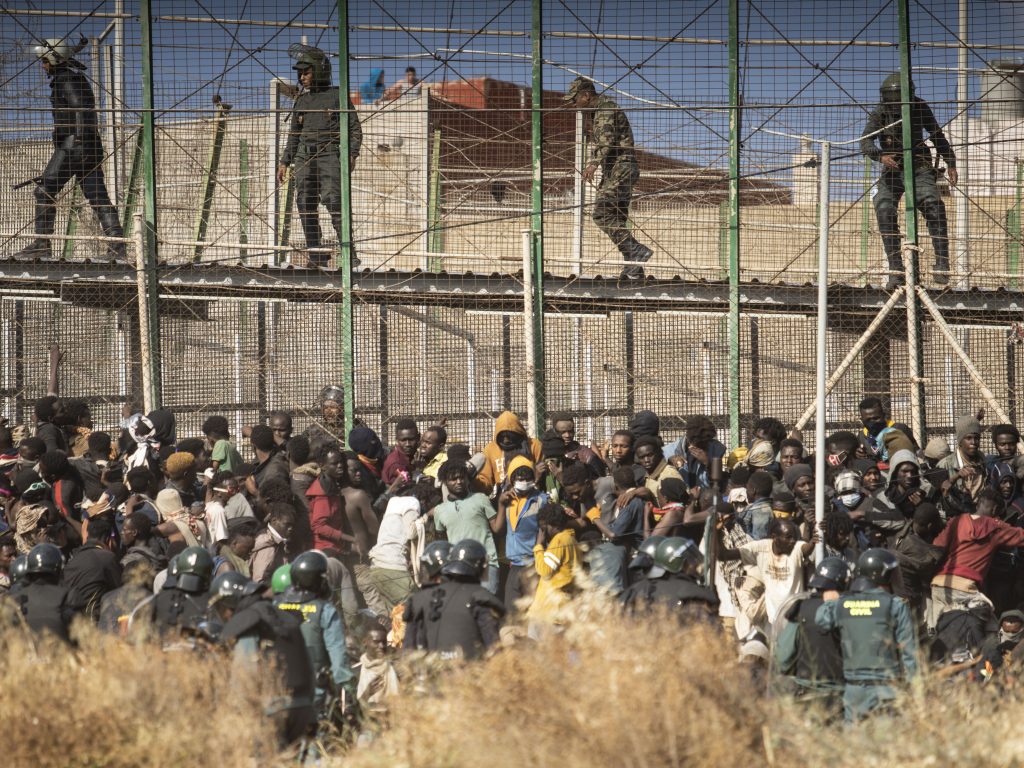
Europe’s deepest crisis is not simply found at its borders, but in the way Europe has learned to see itself. A civilization that distrusts its own history, symbols, and identity eventually loses the confidence necessary to assimilate newcomers, enforce its laws, and defend its frontiers.
Uncontrolled immigration and the fragmentation that follows are symptoms of a deeper loss of national self-respect. For decades, European ruling classes have treated inclusion as an ideological imperative and multiculturalism as a substitute for demographic and cultural continuity, assuming that rights alone could create a sense of belonging and that bureaucracy could hold together increasingly divided societies.
But assimilation requires a human element: a sense of belonging to the nation, and therefore a society confident enough in itself to transmit its own identity. When historical consciousness turns into permanent self-accusation, borders, symbols, continuity, and common culture themselves become objects of suspicion. A society that believes its culture, its past, and its identity are no longer worthy of being defended cannot expect newcomers to adopt or respect its way of life.
The question, therefore, is not simply how many people enter Europe, but whether states still possess the will to absorb them into an existing political community. Immigration becomes destabilizing when governments regulate flows and distribute rights without demanding assimilation.
Integration also has its limits. Beyond a certain threshold, schools, housing, welfare systems, security institutions, and cultural structures lose their capacity to absorb new populations. The result is fragmentation: parallel communities, competing loyalties, crime, and enclaves increasingly detached from the national whole.
Assimilation requires authority. Newcomers must enter a shared civic and national tradition and accept that some inherited customs and loyalties must give way to the laws, history, and character of the society they have entered. The same applies to religious communities.
A state unwilling to impose these conditions does not assimilate. It merely manages coexistence until the host society itself reaches a point of saturation and risks collapse.
Along this fault line, two currents begin to converge: concrete violence and institutional representation.
The first emerges in the cities. Where unassimilated groups do not recognize the norms, memory, or authority of the host nation, crime ceases to appear merely as individual deviance. It becomes the symptom of a deeper separation. Assaults, intimidation, informal control of neighborhoods, and the daily defiance of public order reveal distinct social bodies occupying the same national space.
The second current runs through the institutions. Associations, intermediaries, religious networks, and identity-based parties transform separation into representation. They do not necessarily act against the law. They inhabit it. They use its language, funding, advisory councils, and anti-discrimination mechanisms to influence decision-makers and give political form to a separate identity.
Read the rest at RealClear Defense.
Riccardo Ficicchia is an intelligence analyst at an Italian investigative agency and a research associate at the Yorktown Institute.
